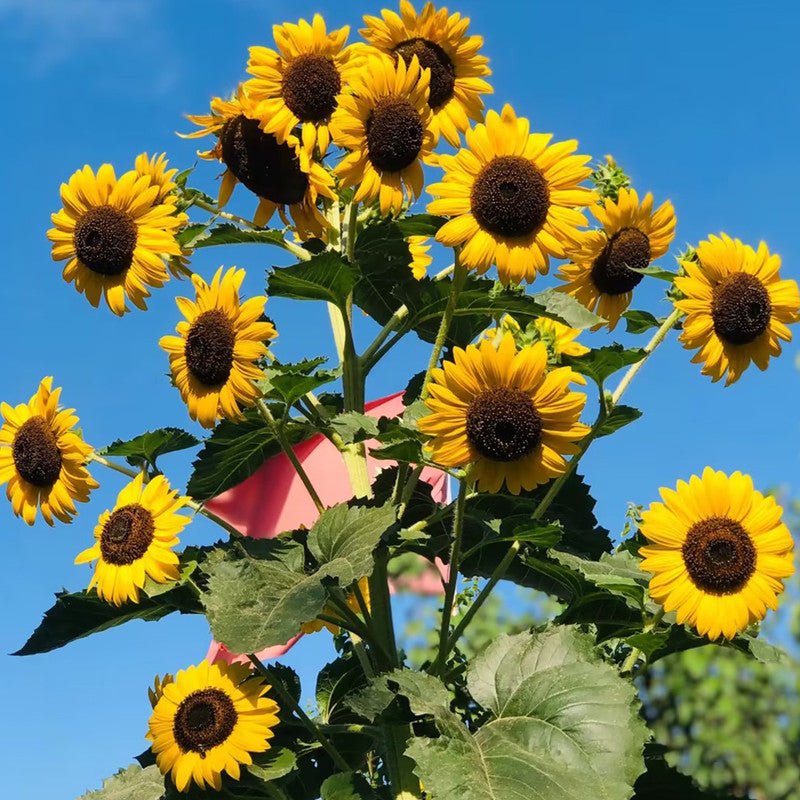
Sunflower Seeds

Sunflower Seeds

Regular price $12.98 USD
Sale price $12.98 USD Regular price
Sale Sold out
style: 200 seeds
  • Free Shipping for all Orders Over $29.9
  • 30 Days Returns for an Exchange Product
  • Secured Payment Payment Cards Accepted
View full details

Description

Sunflower is a fast-growing annual plant known for its large, cheerful yellow flowers that follow the sun. It produces edible seeds and attracts pollinators to gardens.

Product features

• Tall, sturdy stems with large, daisy-like flower heads (6–12 inches across, depending on variety)
• Flowers turn to face the sun throughout the day (heliotropism) in bud stage
• Blooms from mid-summer to early fall, providing long-lasting garden color
• Attracts bees, butterflies, and birds (especially finches when seeds mature)
• Edible seeds that can be harvested for snacking, bird feed, or oil production
• Many varieties available: giant single-head types (10–15 feet tall), branching types (many smaller blooms), and dwarf types (1–3 feet for containers)
• Fast growing from seed, often reaching full height in 70–100 days
• Suitable for gardens, borders, cut flowers, and as a privacy screen or windbreak
• Tolerates poor soil and some drought once established
• Can be used as a trap crop for aphids, drawing them away from other plants

Sowing: Direct sow after last frost when soil has warmed to at least 55°F (13°C). Sow ½–1 inch deep. Space seeds according to variety: giant types 18–24 inches apart, dwarf types 6–12 inches apart. Rows 24–36 inches apart. Full sun required (at least 8 hours daily).

Soil & Temperature: Prefers well-draining, moderately fertile loam (pH 6.0–7.5). Tolerates poor, sandy, or clay soil. Germination temperature 65–85°F (18–29°C).

Germination Time: 7–14 days (faster in warm soil).

Watering: Keep soil evenly moist during germination and early seedling growth (first 2–3 weeks). Once established, water deeply but infrequently (about 1 inch per week). Sunflowers have deep taproots and are moderately drought tolerant. Overwatering may cause root rot.

Additional Tips: Protect young seedlings from birds and slugs. Tall varieties require staking in windy areas. Do not over-fertilize with nitrogen (excess causes weak stems). Harvest seeds when the back of the flower head turns from green to yellow-brown and seeds are plump. Cut the head leaving 12 inches of stem, hang in a dry, airy place to finish drying.