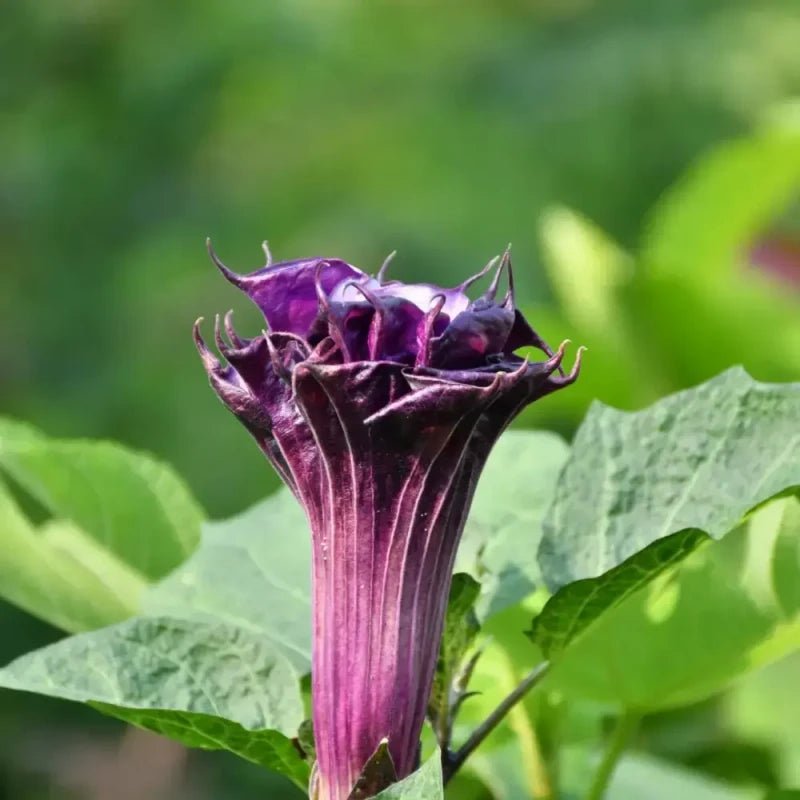
Purple Jimsonweed Seeds
Couldn't load pickup availability
• Large, showy evening-blooming flowers with strong fragrance
• Distinctive purple markings on stems and flower throats
• Fast-growing annual that self-seeds for natural return
• Drought tolerant and adaptable to various soil conditions
- Free Shipping for all Orders Over $29.9
- 30 Days Returns for an Exchange Product
- Secured Payment Payment Cards Accepted

Description
Purple Jimsonweed is a striking annual plant known for its large, trumpet-shaped flowers that range from white to pale violet, often with a darker purple throat. The plant features stout, branching stems that frequently display purple markings, and large, irregularly toothed leaves that emit a distinctive aroma when touched. It produces spiny, egg-shaped capsules containing numerous flat, dark seeds.
Product features
• Large, showy trumpet-shaped flowers (2–5 inches long) in white to light violet shades, often with purple coloration in the throat
• Blooms from early summer through fall (June to October), with flowers opening in the evening and emitting a strong fragrance
• Distinctive purple markings on stems add ornamental interest throughout the growing season
• Unique spiny seed capsules (1–2 inches long) that split open when mature, revealing black seeds
• Fast-growing annual that reaches 2–5 feet in height, with a branching, upright form
• Adaptable and resilient, thriving in various soil conditions and disturbed areas
• Self-seeding nature allows for natural return in following seasons when conditions are favorable
Sowing Season: Start seeds indoors in late March, or direct sow outdoors in mid to late spring after the last frost. For indoor starting, sow in individual pots with 3–4 seeds per pot and thin to the strongest plant.
Sowing Depth & Spacing: Sow seeds ¼–½ inch deep. Space plants 18–24 inches apart, as mature plants can reach 3 feet or more in width. Full sun is required for optimal growth and flowering.
Soil & Location: Prefers well-draining, sandy or loamy soil with neutral to mildly alkaline pH. Choose a location away from areas where children or pets play, and consider using barriers to control seed spread.
Germination: Seeds are light-sensitive and germinate best at temperatures of 60–75°F (15–24°C). Expect germination within 3–6 weeks.
Watering: Water moderately, allowing soil to dry slightly between waterings. Avoid overwatering, as this can cause root rot. Once established, plants show good drought tolerance.
Additional Tips: Handle with care during pruning or maintenance, as plant sap may cause skin irritation in sensitive individuals. Remove spent flowers before seed capsules mature if you wish to limit self-seeding. Use gloves when handling seeds or plant material.