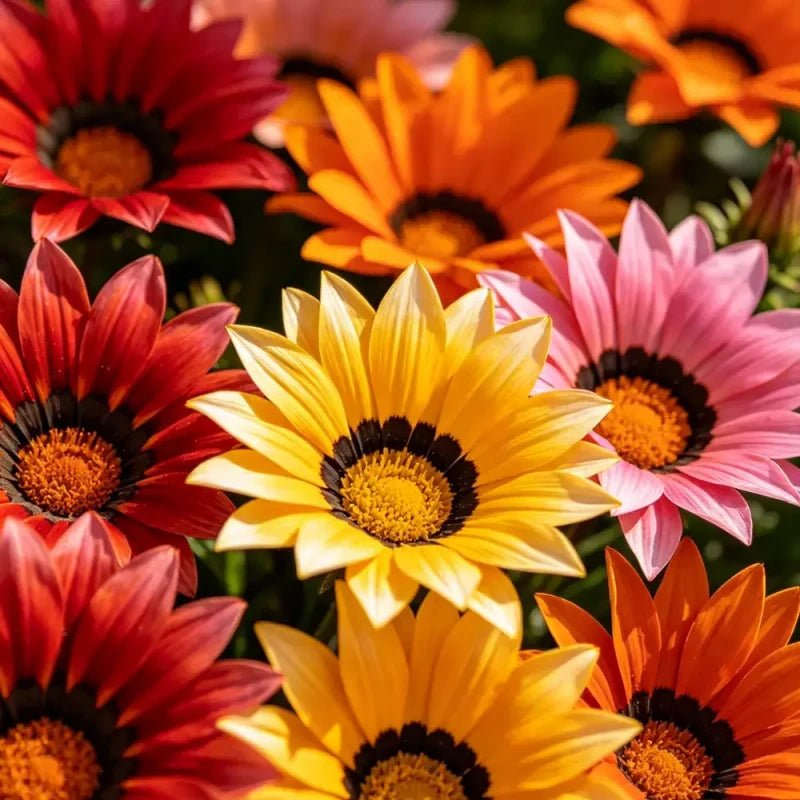
Mixed Color Gazania Seeds

Mixed Color Gazania Seeds

Regular price $4.98 USD
Sale price $4.98 USD Regular price
Sale Sold out
style: 140 seeds

• Large, brilliantly colored daisy flowers in mixed warm hues
• Exceptionally drought tolerant and heat resistant
• Spreading habit suitable for ground cover and slopes
• Flowers close at night and open in full sun

  • Free Shipping for all Orders Over $29.9
  • 30 Days Returns for an Exchange Product
  • Secured Payment Payment Cards Accepted
View full details

Description

Mixed color gazania is a spreading annual or tender perennial grown for its large, brilliantly colored daisy flowers. The plants reach 8–12 inches in height with a similar spread, forming dense, low mounds of dark green foliage. Flowers are available in shades of yellow, orange, pink, red, bronze, and white, often with contrasting bands or spots.

Product features

• Large, showy daisy flowers (3–4 inches wide) in a wide range of warm colors including bicolors
• Spreading growth habit reaches 8–12 inches tall and spreads 12–18 inches wide
• Blooms continuously from late spring to fall frost
• Exceptionally drought tolerant and thrives in hot, sunny conditions
• Suitable for ground cover, rock gardens, slopes, containers, and borders
• Flowers close at night and on overcast days
• Attracts butterflies and bees

Planting Season: Sow after last frost when soil has warmed to 60°F (16°C). Start indoors 6–8 weeks before last frost for earlier blooms.

Light Requirement: Full sun (at least 6–8 hours daily).

Plant Height: 8–12 inches (20–30 cm). Spread: 12–18 inches (30–45 cm).

Seed Prep: No special preparation required. Seeds benefit from light for germination.

Water Needs: Low. Keep soil moist during germination. Once established, water sparingly. Drought tolerant.

Planting Depth: Surface sow or cover very lightly (no more than ⅛ inch / 0.3 cm). Seeds need light.

Sowing Method: Direct sow or start indoors. Transplant after last frost.

Plant Spacing: 10–12 inches (25–30 cm) apart.

Hardiness Zones: Annual in all zones; tender perennial in USDA zones 9–11.

Additional Tips: Deadhead spent flowers. Does not tolerate wet soil. In mild winters, may survive as perennial.