grass

Cicer Milkvetch Seeds

★★★★★ 4.9 · Customer reviews
$42.98

High-germination, non-GMO, open-pollinated seeds selected for home gardens across the USA.

style
In stock — ships in 1–2 business days
Germination SupportPractical guidance when you need it
USA Garden FriendlySeeds selected for USA gardens
Secure CheckoutProtected payment experience
$42.98

Growing at a Glance

The essential growing information for this variety, shown in one easy-to-scan view.

Core plant data
Plant Height 2-8 ftVariety-specific habit
Light Requirement Full Sun6+ hours daily
Growing Season Early Spring, Spring, FallFollow local frost dates
USDA Zone Zone 3~8Selected for USA gardens
Germination 10-21 DaysKeep evenly moist
Days to Maturity 60-90 Days to establishmentVariety dependent
Plant Spacing Broadcast at the recommended seeding rateAllow healthy airflow
Growing Difficulty ModerateGrowing support available
Shipping & Returns

Simple delivery. Clear support.

Shipping

Orders typically leave our warehouse in 1–2 business days. Free standard shipping is available on qualifying U.S. orders of $29.9+.

Returns & order issues

Unopened seed packets may be returned within 30 days of delivery. Contact our support team for damaged, incorrect or missing items.

Seeds are living products. If you have germination questions, our team provides practical growing guidance to help you troubleshoot.

About this seed

Why gardeners choose this variety

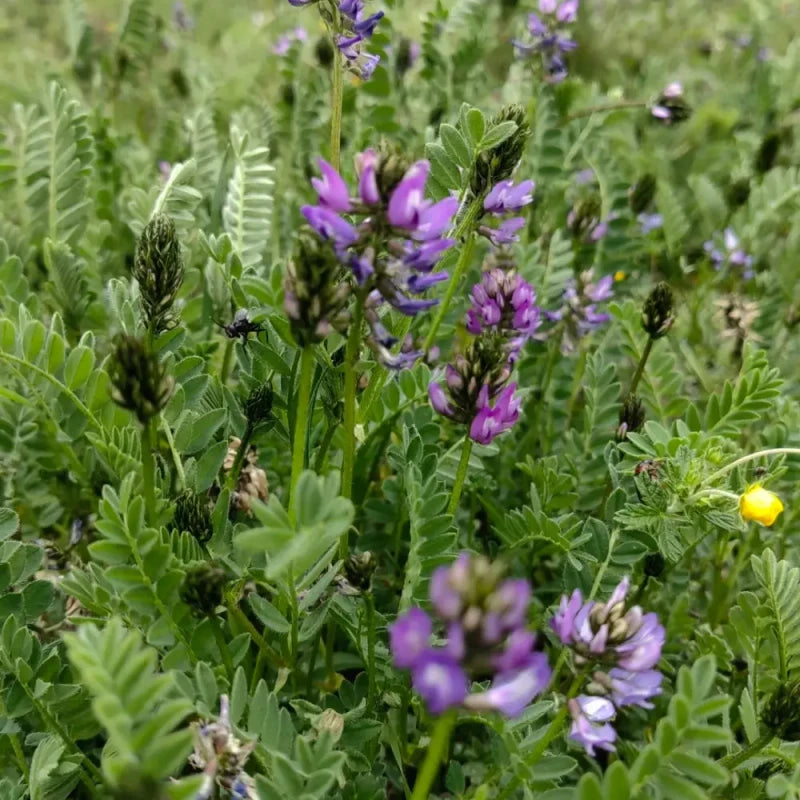
Cicer milkvetch is a forage legume rather than a grass, despite often being considered alongside pasture seeds. Astragalus cicer has been used in managed grazing and hay systems, where its perennial growth offers a different contribution from annual field legumes. Its compound leaves and pea-like flowers reveal that family relationship.

Plan it within a suitable forage system, using reliable guidance on establishment, companion species and harvest management. A small trial plot can help assess how it develops in the local conditions before wider use. The crop's common forage role does not transfer to other Astragalus species, some of which are toxic. Keep the exact identity attached to the seed and avoid treating every milkvetch as equivalent livestock feed.

Key features

What makes it stand out

  • Divided leaves and upright flower clusters create a perennial legume texture.
  • A managed planting brings consistent ground-level texture.
Perfect for

Best garden uses

  • Managed cover-crop plots
  • Botanical grass and legume collections
  • Agricultural demonstration beds
Growing tips

A stronger start

  • Sow into a firm, well-drained seedbed in the season suited to the species.
  • Use an appropriate rhizobium inoculant where recommended for the crop.
  • Keep moisture steady during establishment and control competing weeds.
  • Plan cutting and seed-set management for the intended planting use.

Questions & Garden Results

Clear answers resolve the last planting doubts; photo reviews add useful social proof.

Decision support
When should I plant these seeds?

Use your local last-frost date and follow the variety-specific planting directions on the packet.

How many seeds are included?

The selected seed-count option shows the approximate quantity included in each packet.

How long does germination take?

Use the germination range shown above and keep temperature and moisture within the packet guidance.

What if I need help with germination?

Our team can help review planting depth, temperature, moisture and timing so you can adjust your growing setup with confidence.

Michelle R.
★★★★★

The packet directions were clear, the plants established well and the garden result was beautiful.

Michelle R. Verified buyer
Sarah T.
★★★★★

Easy to follow and very rewarding to grow. I will add this variety to my garden again.

Sarah T. Verified buyer

You Might Also Like

View more →